
Blog Objective
Fire safety regulations can be daunting, with new developments coming into place. This blog will inform you on how Cavity Barriers work, where you will require them, and what you, as a law-abiding citizen of the UK, must do.
Fire safety isn’t something most people think about every day. You live, work, or manage a building assuming it’s safe. But behind the walls and ceilings are hidden spaces where fire can spread far faster than you might expect.
That’s where cavity barriers UK buildings rely on come into play. These unseen protections form a vital part of Residential Fire Protection, quietly slowing fire down and buying time when it matters most. Many people only hear about them after an inspection highlights an issue, which can feel stressful and confusing.
Let’s talk through it properly, so you know what to look out for and why it matters.
Key Takeaways
- Hidden spaces allow fire to spread quickly if left unprotected
- Cavity barriers help slow fire and smoke inside walls and ceilings
- Both homes and commercial buildings have legal responsibilities
- Poor installation or missing barriers can put lives at risk
- Regular checks and proper records make a real difference
Table of Contents
- Why Cavity Barriers Matter More Than You Might Think
- What Cavity Barriers Actually Are
- How Fire Spreads Through Hidden Spaces
- The Role of Horizontal & Vertical Fire Barriers
- Where Cavity Barriers Are Needed in Real Buildings
- What UK Building Regulations Expect From You
- How Proper Installation Makes All the Difference
- Cavity Barriers in Homes, Flats, and Residential Blocks
- What Changes in Commercial Buildings
- Issues We Commonly Find During Our Inspection
- How to Determine If Your Building Is Protected
- Frequently Asked Questions About Cavity Barriers
- Maintaining Public Safety with Adequate Fire Protection Measures in Place
Why Cavity Barriers Matter More Than You Might Think
You may never see a cavity barrier, but you rely on it more than you realise.
If you own, manage, or live in a building, you’re trusting Residential Fire Protection systems to work when something goes wrong. Fire doesn’t just move through rooms. It travels through gaps, voids, and concealed spaces, often unnoticed.
At CA Fire Protection, we often see buildings that look fine on the surface but have serious gaps behind the scenes.
What Cavity Barriers Actually Are
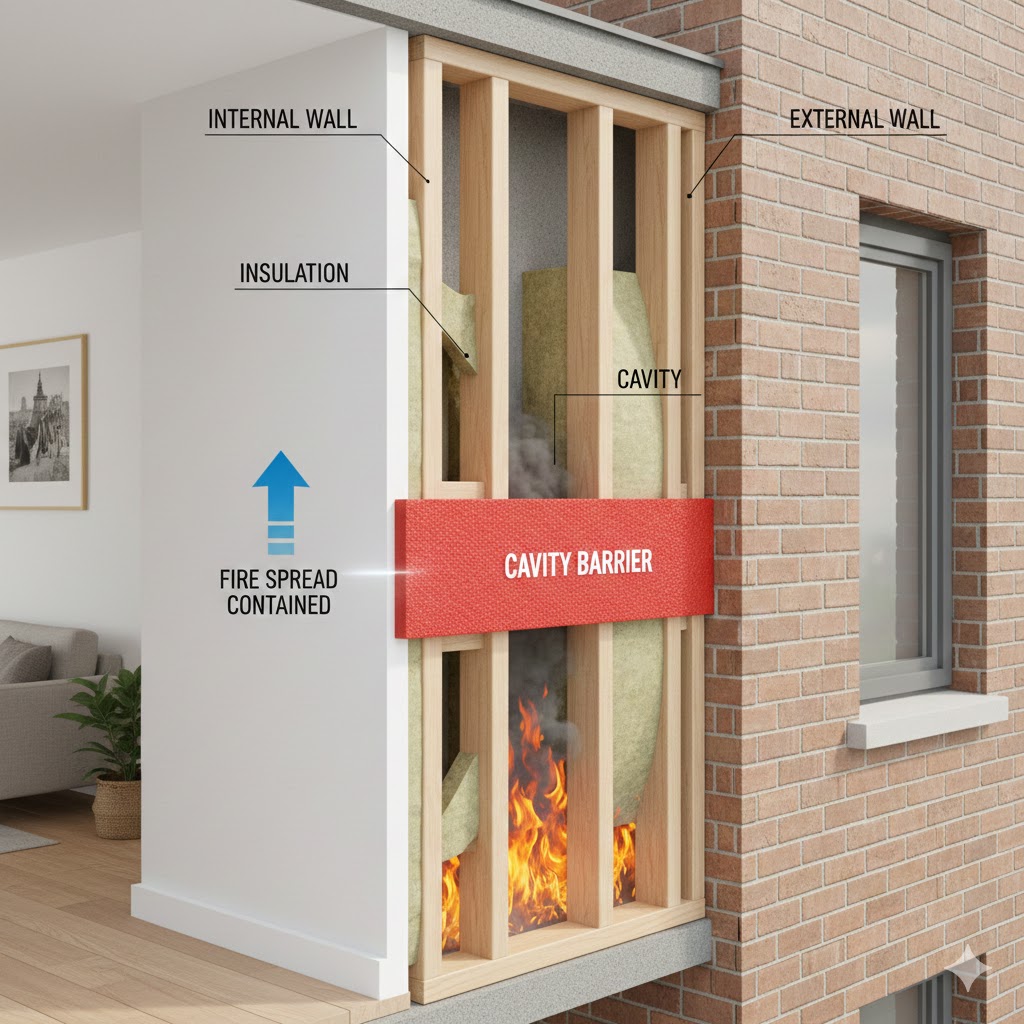
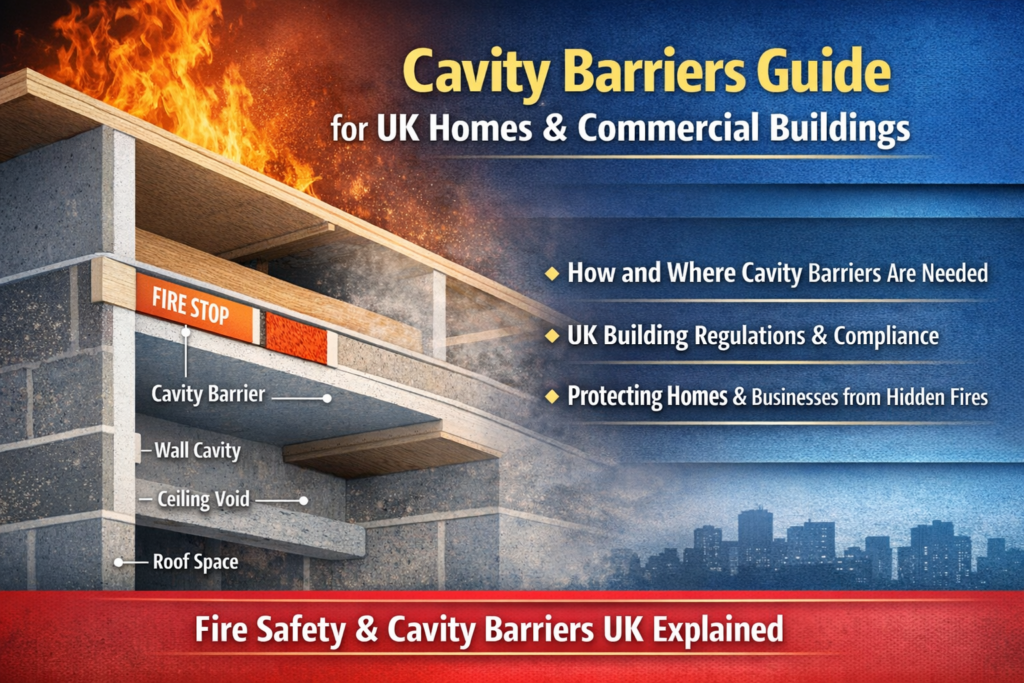
Cavity barriers are fire-resistant materials fitted inside concealed spaces. These spaces are commonly found between external walls, above ceilings, below floors, or within roof voids.
Their purpose is simple. They slow fire and smoke as it moves through these hidden routes. Many cavity barriers UK systems use materials that expand when exposed to heat, sealing gaps tightly during a fire.
They don’t stop fire completely, but they buy time. And time saves lives.
How Fire Spreads Through Hidden Spaces
Once fire enters a cavity, it behaves differently. The space draws flames and smoke upwards, much like a chimney.
Upper floors can be affected before anyone realises how serious the situation is. That’s why relying on alarms alone isn’t enough. Residential Fire Protection depends on containing fire as well as detecting it.
The Role of Horizontal & Vertical Fire Barriers
Fire spreads in more than one direction.
complete fire barrier systems work together to divide large cavities into smaller sections. Horizontal barriers help stop fire moving between floors. Vertical barriers limit spread around windows, doors, and wall junctions.
Together, they reduce how far and how fast fire can travel.
Where Cavity Barriers Are Needed in Real Buildings
Cavity barriers will be required wherever hidden areas may afford a route for fire spread.
Generally, this would include things like:
- External wall cavities at each floor level
- Sills around windows and doors
- Roof voids and loft conversions
- Between flats within residential blocks
Once these areas become unprotected, then professional cavity fire barrier installation becomes vital to restore safety.
What UK Building Regulations Expect From You
UK fire safety law sets clear expectations.
Approved Document B outlines where cavity barriers must be installed, supported by British Standards such as BS 9991. All this falls under building regulation fire protection, covering both domestic and commercial buildings.
If you own or manage a building, it’s your responsibility to ensure these requirements are met and recorded properly.
How Proper Installation Makes All the Difference
Even the best materials won’t work if they’re fitted badly.
Correct cavity fire barrier installation means using tested systems, installing them correctly, and documenting the work. At CA Fire Protection, this includes photographic evidence and certification, so nothing is left unclear.
Good records support long-term Residential Fire Protection and help protect you legally.
Cavity Barriers in Homes, Flats, and Residential Blocks
In houses, cavity barriers are commonly needed at floor levels and around openings.
In blocks of flats, the risk is greater. Each flat should act as its own fire compartment. Barriers help prevent fire spreading between neighbours and up the building.
This is why cavity barriers UK standards are now enforced more strictly across residential properties.
What Changes in Commercial Buildings
Commercial buildings often have larger voids created by suspended ceilings, raised floors, and service risers.
Offices, shops, schools, and care homes must meet higher building regulation fire protection expectations due to occupancy levels. Refits and layout changes can easily damage barriers, which is why checks are so important.
Some problems appear repeatedly:
- That missing Barriers
- Gaps surrounding pipes and cables
- Barriers removed during refurbishments
- Use of wrong materials
Such concerns make the residential fire safety less effective, as neglecting which can result in severe repercussions.
How to Determine If Your Building Is Protected
Begin with Your Paperwork. Keep documents showing where the cavity barrier has been installed.
If you’re unsure, a professional survey can confirm whether your cavity fire barrier is doing its job. Catching the error prior is always easier than fixing the error.
Maintaining Public Safety With Adequate Fire Protection Measures in Place
Fire safety extends beyond compliance with regulations. Fire safety does not necessarily mean making sure the structure you own is protected; instead, it means keeping the people who live in, work in, or visit your
Effective cavity barriers UK systems resist the spread of fire, limit damage, and give residents time to escape. In combination with installation, inspection, and recording, these methods provide the final piece of a dependable system of fire protection.
And if you’re not sure what might be lurking inside your walls, seeking the advice of professionals now can save you headaches down the road. A good fire protection system is more than just a practical feature for a building. It provides peace of mind, something that every building needs.
It will help if you make sure that your property is comprehensively protected, and for that, you can contact CA Fire Protection today for effective cavity fire barriers, horizontal and vertical fire barriers, and trustworthy Residential Fire Protection that satisfies building regulation fire protection criteria.
Frequently Asked Questions
Are cavity barriers required by law in the UK?
Yes. They’re a legal requirement under UK Building Regulations and Approved Document B.
How long do cavity barriers last?
When installed correctly and kept dry, they can last for many years.
Are cavity barriers the same as fire stopping?
No. Cavity barriers protect hidden spaces, while fire stopping seals service penetrations.
Do renovations affect cavity barriers?
Very often. Any building work should consider existing barriers to avoid damage.