
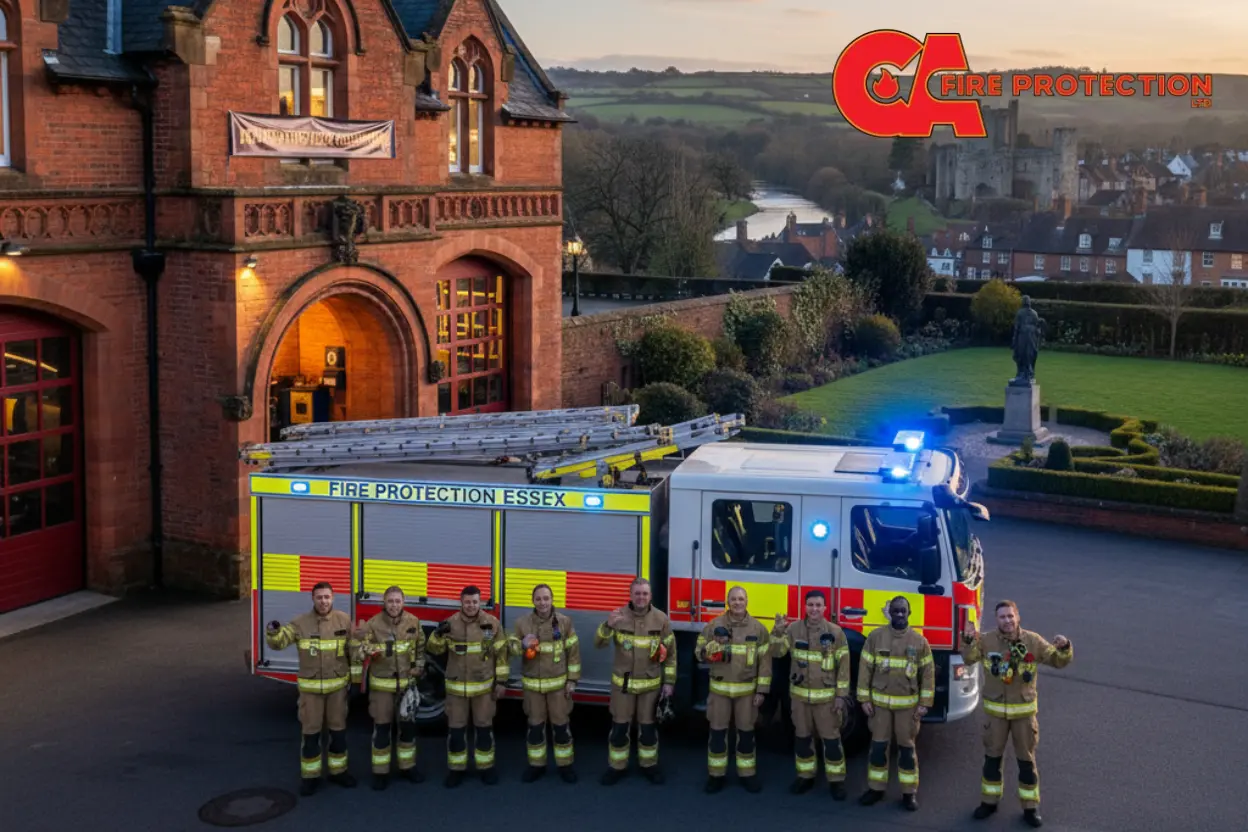
Objective
Educate companies and households about the fire protection in Essex, services offered, legal responsibility and how to select the appropriate specialist.
Key Takeaways
- Fire protection will mitigate danger to human life, property and business operations.
- Passive fire protection is also required in new and old buildings.
- The Essex properties should comply with the UK building and fire safety regulations.
- The survey of the professionals and certified installation guarantees compliance and long term safety.
Introduction
Property owners are not at liberty to choose whether to be fire safe or not in Essex. Fire and rescue services respond to tens of thousands of building fires annually across the UK with several of these being associated with poor compartmentation and insufficient fire stopping. That is to say that fire spreads at an unexpected rate endangering lives and buildings. The fire protection in Essex is aimed at reducing the rate of fire and smoke spread, securing the escape routes and ensuring the occupants have time to evacuate safely. Regardless of whether it is a commercial premise, residential block, or a building of public nature, appropriate fire protection systems are a very important layer of defence.
Table of Content
- What Fire Protection Means
- The reason why fire protection is important in Essex.
- Passive Fire Protection: Explanation.
- Comparison of Passive and Active Fire Protection.
- Essex Building Core Fire Protection Systems.
- The Question of Selecting a Fire Protection Specialist.
- Mid Page Call to Action
- FAQs
- Take Action Before Fire Does
What Fire Protection Means
Fire protection is all those efforts aimed to prevent the spread of fire and save both people and buildings. It addresses installed systems as well as built in materials. The main goal is simple. Control smoke, contain fire, and have safe escape routes.
Fire protection is of two types
- Passive fire protection that is incorporated into the structure.
- Active fire protection, which reacts to the creation of fire.
The two are vital but passive protection is always active even prior to the alarms and sprinklers being triggered.
The reason why fire protection is important in Essex
The Essex area consists of both new developments, industrial areas, office buildings, schools, and old residential buildings. All forms of property contain concealed empty spaces, service risers and structural features that may enable fire to move rapidly in case of the lack of protection.
Proper fire protection assists you to:
• Secure visitors and occupants.
• Adhere to fire safety laws.
• Minimize fire structural damage.
• Reduce incidents on business downtime.
Support insurance requirements and risk management requirements.
Minutes after the origin of the fire, even minor fire can spread outside the room of its origin without proper fire stopping and compartmentation.
Passive Fire Protection: Explanation
Passive fire protection is aimed at containing fire in compartments. It also retards the passage of heat, flames and smoke on the wall, floors, ceilings and service openings.
Common passive fire protection provisions are:
• Fire containment on pipes, cables and ducts.
• Wall and ceiling cavity barriers.
• wraps and fire resistant boards.
• Structural steel intumescent coating.
• Fire curtains and fire doors
Experts like CA Fire Protection Ltd specialize in building surveys, detecting points of weakness and the installation of a system that is tested and conforms to the British Standards.
Comparison of Passive and Active Fire Protection
Feature Passive Fire Protection Active Fire Protection.
Mechanism | In-built into the building to take effect when there is a fire.
Examples: Fire stopping, Cavity Barriers, Fire Doors: Alarms, sprinklers, detectors.
Primarily to contain fire and smoke/ Detect and suppress fire.
When it is in operation | at all times during a fire event
Role in escape | Guards the escape routes | warns the occupants to leave.
You need both. Passive systems contain the fire. Active systems also warn citizens and contain flames.
Essex Building Core Fire Protection Systems
Fire Stopping
The perimeter of services is closed using fire rated materials. This prevents inter-room and inter-floor fire and smoke.
Cavity Barriers
There may be hidden areas behind walls and ceilings that may serve as chimneys during a fire. These routes are sealed by cavity barriers which ensure compartmentation.
Structural Fire Protection
Steel becomes weak within a short time at high temperature. Load bearing elements are armed by intumescent coatings and fire resistant boards and are used to resist early collapse.
Fire Curtains
These are automatic fire resistant separation barriers that are set up in open plan areas. They aid in the defense of escape routes and curtail fire.
Fire Doors
Fire doors can withstand fire over a specified duration and secure stairwells and corridors. Proper maintenance and installation are a must to performance.
Mid Page Call to Action
In case you are not sure whether your building complies with fire safety standards or not, reserve a professional fire protection survey. A competent team will be able to find the risks, propose upgrades and help with the provision of clear compliance documentation.
The Question of Selecting a Fire Protection Specialist.
Contractors do not have equal expertise. To choose a fire protection company in Essex, pay attention to:
• History with other forms of building.
• The awareness of the existing regulations of fire safety in the UK.
• Certifications of third parties and trained installers.
• Comprehensive questionnaires and transparent reporting.
• Capacity to do both installation and remedies.
You do not want a partner who only knows about individual products, you want to know about compartmentation.
Take Action Before Fire Does
Fire does not have second chances. Ensure that your Essex building is adequately protected. To seek professional recommendations, questionnaires, and qualified installation, call CA Fire Protection.
Website: https://cafireprotection.co.uk/
Email: info@cafireprotection.co.uk
Frequently Asked Questions
What is residential building fire protection?
Fire protection encompasses material and systems that interrupt or reduce the propagation of the fire and smoke and safeguard the people and buildings.
Is passive fire protection a legal mandate?
Yes. Fire laws and building codes demand proper Separation and fire stopping in most forms of buildings.
What is the period of time within which fire protection is to be inspected?
During routine fire risk assessments and any building work that involves walls, floors or services, fire protection must be examined.
Is it true that having the poorest fire stopping is so important.
Yes. Cables and pipes may be having small gaps that can easily spread smoke and flames among compartments.
Who has the responsibility of fire protection in a building?
Fire safety law requires that the building owner, landlord or other person in charge of the building should have proper fire protections in place and maintained.