

Objective
The purpose of this article is simple. We want to help you understand why building fire safety can no longer be treated as an afterthought. Whether you manage a commercial site or live in a shared residential property, the way a building reacts during a fire can decide outcomes in minutes.
What this really means is clarity. You will learn how built-in fire safety supports compliance, protects lives, and reduces long-term damage to buildings and businesses.
Key Takeaways
- Modern buildings rely on layered fire safety, not just alarms and extinguishers
- Built-in fire protection slows smoke and heat before emergency crews arrive
- Property owners and managers have clear legal duties under UK fire rules
- Early planning reduces risk, cost, and disruption later
Introduction
Most fires don’t cause damage because of flames; they cause devastation because smoke and heat spread faster than people expect.
In the UK, official fire data shows that smoke inhalation is a leading cause of fire-related deaths, not direct contact with fire. That single fact changes how we should think about safety. Fire protection is not only about stopping a fire from starting. It is about slowing its spread long enough for people to escape safely.
This is where passive fire protection comes into focus. It refers to the fire-resistant features built into a structure that work all the time, without switches, power, or human action. As buildings become larger, more complex, and more occupied, both commercial properties and residential spaces face higher fire risks. Built-in fire-resistant measures are no longer optional. They are part of responsible building ownership and modern compliance.
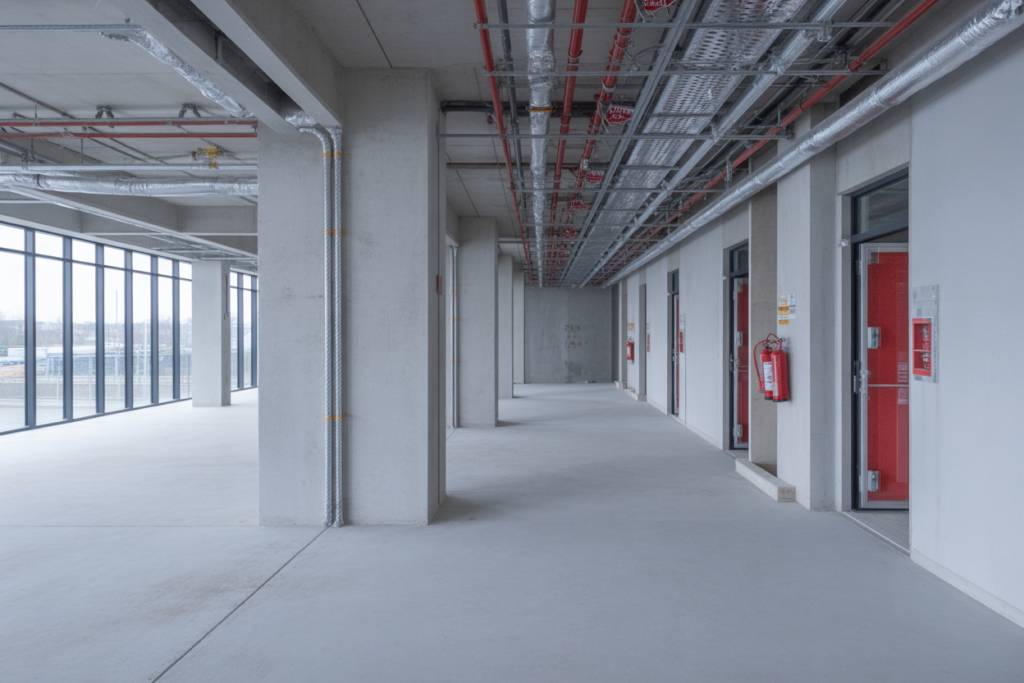
Table of Contents
- Built-In Fire Safety That Protects Lives and Structures
- How Fire Safety Measures Work Without Power
- Why Fire Containment Matters in Commercial and Residential Buildings
- Key Advantages Property Owners Cannot Ignore
- UK Standards, Compliance, and Building Responsibility
- Where Design Choices Intersect with Fire Safety
- Common Misconceptions About Fire Protection
- Choosing the Right Fire Protection Partner
- Frequently Asked Questions
- Fire Safety That Works When Every Second Counts
Built-In Fire Safety That Protects Lives and Structures
Some safety systems wait for someone to react. Others are already working before danger appears. Built-in fire safety belongs to the second group. These measures are part of the building itself and do not rely on human action.
Understanding Structural Fire Barriers in Modern Buildings
Structural fire barriers include fire-rated walls, floors, doors, and sealed service gaps. Their job is simple but powerful. They slow the movement of fire and smoke from one area to another.
What this really means is time. Time for people to exit. Time for firefighters to arrive. Time is often the deciding factor whether damage stays contained or spreads across an entire building.
How Fire Safety Measures Are Designed to Work Without Power or Activation
Not all protection depends on alarms, sensors, or water systems. Certain security measures are built to work even when the building is unoccupied or if power is out.
How Passive Fire Protection Works Inside Walls and Floors
This is where we describe the passive fire protection system in simple words. Fire-rated materials create compartments within a building. These compartments hold fire in one place for a set period, often 30, 60, or 120 minutes.
Because these systems do not depend upon electricity sources, these systems are functional even in power interruptions or during nighttime hours. This makes them indispensable in highly-risk areas like offices, hospitals and multi-storey buildings.
Why Fire Containment Is Critical for Commercial and Residential Buildings
Workplaces and homes face different risks, but the goal is the same. Keep people safe and limit damage.
Commercial Building Fire Safety and Occupant Risk
In offices, retail units, healthcare facilities, and public buildings, evacuation is rarely simple. People may not know escape routes or may need assistance. That is why commercial building fire safety depends heavily on containment.
Fire-resistant structures slow the spread, reduce panic, and support safe evacuation under pressure. Employers and building owners also carry a clear duty of care.
Passive Fire Protection for Homes and Multi-Occupancy Properties
In flats, apartment blocks, and HMOs, occupants are often asleep when fires start. Passive fire protection for homes helps contain fire within one flat or corridor, protecting neighbours who may not even know a fire has begun.
Key Advantages Property Owners Cannot Ignore
From a decision-maker’s point of view, safety choices must also make sense in the long term.
The Real-World Benefits of Passive Fire Protection
The benefits of passive fire protection are practical and measurable:
- Life safety through slower fire and smoke spread
- Reduced property damage by limiting fire movement
- Legal compliance with UK building and fire safety rules
- Lower insurance risk and fewer costly repairs
A facilities manager once shared how proper compartmentation prevented a small electrical fire from shutting down an entire office floor. Business resumed the next day. Without it, the outcome would have been very different.
UK Standards, Compliance, and Building Responsibility
UK fire regulations have become stricter for a reason. Past incidents showed what happens when safety systems fail or are ignored.
Passive Fire Protection Systems UK and Legal Expectations
Systems for passive fire prevention within the UKstandards require regular inspections for proper installation and accurate documents. Surveys reveal gaps where fire can enter flooring or walls.
The building owners are responsible for their buildings throughout the building’s lifespan. Professionally installed installers, clear documentation, and regular checks are not an optional feature. They are a part of the compliance and risk management. This is the area where the experienced company CA Fire Protection Ltd focus on their job.
Where Design Choices Intersect with Fire Safety
Modern buildings often blend open design with safety needs. The balance matters.
Glass Railing For Offices and Fire-Safe Design Planning
Glass Railing For Offices must meet fire-resistance requirements without blocking escape routes or spreading heat.
Glass Railing For Malls and Crowd Safety Considerations
Glass Railing For Malls requires careful planning. Large crowds and open spaces demand strong containment strategies.
Glass Railing For Staircases and Escape Route Protection
Glass Railing For Staircases must support clear exits. Stairwells are critical during evacuation.
Safety Glass Railing Systems in Modern Buildings
Safety Glass Railing Systems can support compliance when combined with proper fire-rated materials and installation.
Common Misconceptions About Fire Protection
Many people assume alarms and sprinklers handle everything. That belief creates gaps.
Why Alarms and Sprinklers Alone Are Not Enough
Alarms alert people. Sprinklers control flames. But neither stops smoke from spreading through unsealed spaces. That is why passive fire protection remains essential alongside active systems.
Choosing the Right Fire Protection Partner
At this stage, knowledge turns into action.
What to Look for in a Professional Fire Protection Provider
Look for experience, clear surveys, and understanding of UK compliance. Providers like CA Fire Protection focus on inspections, installation, and long-term safety planning rather than quick fixes.
Fire Safety That Works When Every Second Counts
Fire safety is about preparation, not reaction. When smoke spreads fast, built-in systems slow the damage and protect lives. Passive fire protection plays a central role in both residential and commercial buildings. Combined with passive fire protection systems, UK standards support safety, compliance, and peace of mind.
Call to Action
If you manage or own a building, now is the right time to review your fire safety measures. Professional surveys, expert advice, and compliant installation make all the difference. Speak with the team at CA Fire Protection to take the next step toward safer, fully compliant buildings you can trust every day.
Frequently Asked Question
Active systems respond to fire. Passive systems contain it from the start.
Yes, under building and fire safety rules, it forms part of compliance.
Inspections depend on building use, risk level, and previous findings.
It works continuously, but inspections ensure nothing has been damaged.
Yes. Many upgrades are possible without major structural changes.