
Objective
This blog explains the reason why commercial fire protection services can be mandatory for UK businesses, what the law demands from you, and how proper fire protection will help you keep the law while safeguarding your occupants and assets.
Key Takeaways
- UK businesses have legal fire safety responsibilities.
- Commercial fire protection services help meet compliance requirements.
- Fire risk assessments are an important legal obligation.
- Passive fire protection plays a major role in limiting fire spread.
- Failure to comply can result in penalties, legal action, and business disruption.
- Regular inspections and maintenance help keep buildings compliant.
Introduction
A fire can change a business in minutes. It can stop operations, damage property, put lives at risk, and create serious legal problems. Many business owners focus on alarms and extinguishers, but fire safety goes much further than that.
Here’s the thing: UK law requires businesses to take reasonable measures to stop fire spreading and to safeguard the people who live in the building. This is the reason commercial fire protection is not just an excellent idea. They are a legal responsibility.
According to UK fire safety legislation, the person responsible for a commercial building must ensure appropriate fire safety measures are in place and maintained. This includes both active and passive fire protection systems designed to protect life and property.
Whether you manage an office block, housing development, healthcare facility, educational building, or commercial premises, understanding your obligations is essential.
Table of Contents
- What Are Commercial Fire Protection Services?
- UK Fire Safety Laws Every Business Should Understand
- Why Fire Protection Is a Legal Requirement
- The Role of Passive Fire Protection in Compliance
- Risks of Non-Compliance
- Practical Steps to Stay Compliant
- Real-World Example
- Frequently Asked Questions
What Are Commercial Fire Protection Services?
Commercial fire protection services include systems, inspections, surveys, and safety measures designed to reduce fire risks and protect people within a building.
These services generally fall into two categories:
| Active Fire Protection | Passive Fire Protection |
|---|---|
| Fire alarms | Fire compartmentation |
| Sprinkler systems | Fire stopping |
| Smoke detection | Fire doors |
| Emergency alerts | Fire-resistant walls and floors |
Active systems respond when a fire occurs. Passive systems are integrated into the structure to help in reducing the spread of smoke and fire. Both work together to improve safety.
What this really means is that a building needs more than alarms to remain safe. It also needs properly maintained fire-resistant barriers that help contain a fire long enough for people to evacuate safely.
UK Fire Safety Laws Every Business Should Understand
Many homeowners are shocked to discover that much responsibility falls on them.
Under UK fire safety legislation, a designated Responsible Person must ensure that suitable fire precautions are in place. This responsibility often falls on:
- Commercial property owners
- Employers
- Facilities managers
- Landlords
- Managing agents
This is where commercial fire safety obligations in the UK become important.
You are expected to assess risks, maintain fire protection measures, and keep evidence showing compliance.
One of the most important duties is completing a commercial fire risk assessment legal requirement. This assessment identifies potential hazards, evaluates risks, and highlights areas where improvements may be required.
For many organisations, the fire risk assessment becomes the foundation of their entire fire safety strategy.
Why Commercial Fire Protection Services Are a Legal Requirement
The law focuses on protecting people first.
The measures to protect against fire can prevent small fires from turning into a major catastrophe. If there isn’t enough protection, smoke and fire could quickly spread throughout the building, which can reduce evacuation times and pose a greater risk of injuries.
There are three main reasons why commercial fire protection services are legally required.
Protecting Life
Employees, visitors, contractors, tenants, and residents all rely on safe buildings. Fire protection measures help create safer escape routes and provide additional time for evacuation.
Supporting Legal Compliance
Businesses must prove that reasonable steps are taken to lower the risk of fire. Inspections, surveys and maintenance records show that they are in conformity.
Protecting Property and Business Operations
A fire not only affects a building. It can affect staff, customers, contracts, and revenue. Proper fire protection reduces the likelihood of extensive damage and prolonged downtime.
The Role of Passive Fire Protection in Compliance
When discussing compliance, passive fire protection deserves special attention.
Many commercial buildings contain hidden areas where fire and smoke can travel quickly. Openings created by cables, pipes, ventilation systems, and refurbishment work can weaken fire-resistant barriers.
This is why passive fire protection legal requirement for commercial buildings remains such an important topic.
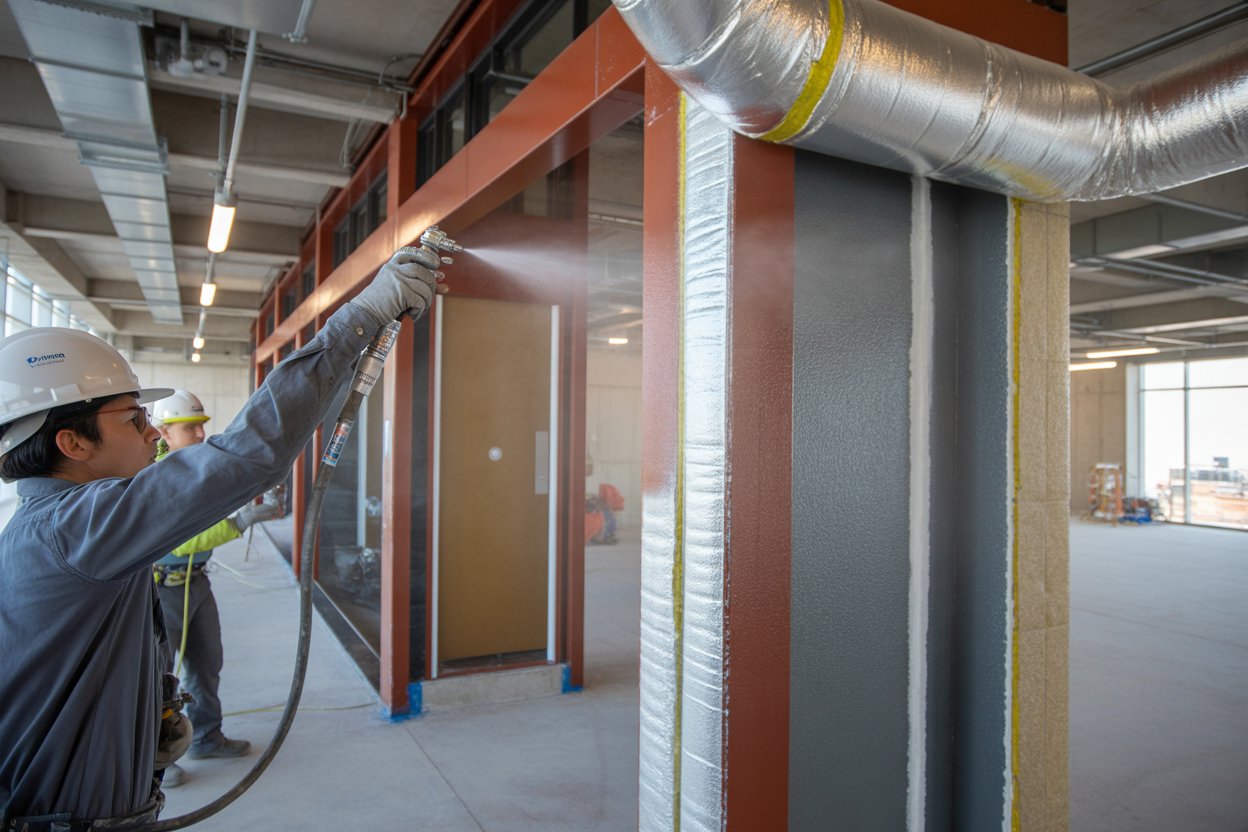
Passive fire protection includes:
- Fire stopping
- Fire compartmentation
- Fire doors
- Cavity barriers
- Fire-resistant walls and floors
The fire compartmentation process involves dividing buildings into different sections to limit the spread of smoke and fire. This method improves safety for people and also helps safeguard the property.
Similarly, fire stopping seals openings around service penetrations and construction joints to maintain the fire resistance of walls and floors.
At CA Fire Protection, services such as fire stopping, compartmentation surveys, fire door inspections, and passive fire protection solutions help commercial clients maintain compliance and improve building safety.
What Happens If Your Business Fails to Comply?
Some organisations only think about fire safety when an inspection is scheduled.
That approach can become expensive.
Non-compliance can result in:
| Compliance Failure | Possible Outcome |
|---|---|
| Missing fire protection measures | Enforcement action |
| Poor maintenance records | Legal issues |
| Fire safety breaches | Financial penalties |
| Significant fire spread | Property damage |
| Unsafe escape routes | Increased risk to occupants |
There is also the possibility of insurance complications if fire safety measures have not been properly maintained.
Beyond financial costs, businesses may face reputational damage and operational disruption that can take months to recover from.
How to Stay Compliant With UK Fire Safety Regulations
The good news is that compliance becomes much easier when approached proactively.
Carry Out Regular Fire Risk Assessments
Your fire risk assessment should be reviewed regularly and updated whenever building layouts or occupancy levels change.
Schedule Professional Surveys and Inspections
Surveys on fire compartmentation, as well as fire door inspections and passive reviews of fire safety, could detect issues before they turn into issues with compliance.
Keep Accurate Records
Maintain documentation covering inspections, maintenance work, repairs, and risk assessments.
Work With Qualified Specialists
Experts in fire protection can help you identify risks that are not obvious and provide solutions.
This method assists you in meeting all of your commercial fire safety obligations in the UK while making the building a safer place for the people who are using it.
A Real-World Example
Imagine a commercial office building undergoing refurbishment.
New electrical and mechanical services are installed throughout the property. During the works, several fire-resistant walls are penetrated to accommodate cables and pipework.
Months later, a compartmentation survey identifies multiple unsealed openings.
Although the issue is not immediately visible, those gaps could allow fire and smoke to move rapidly between areas of the building.
After professional fire stopping work is completed, the building’s fire compartments are restored, compliance is improved, and the risk to occupants is significantly reduced.
This type of issue is far more common than many property owners realise.
Fire Safety Is More Than Compliance-It Protects Everything You Have Built
Fire safety legislation exists for a reason.
It protects lives, buildings, businesses, and communities.
When you choose to invest in commercial fire protection services. You aren’t just doing a checkbox to comply. You’re reducing risk by safeguarding occupants, ensuring the continuity of your business, and ensuring that your building functions in a way that is intended for an emergency.
For commercial property owners, facilities managers, contractors, and housing providers, staying ahead of fire safety requirements is one of the most important responsibilities you have.
Ready to Review Your Fire Safety Compliance?
If you are unsure whether your building is in compliance with the current requirements for fire safety, a professional inspection can assist in identifying risks and highlighting areas that need to be addressed. CA Fire Protection provides specialist passive fire protection services that are designed to ensure compliance and increase the safety of commercial buildings throughout the UK.
Frequently Asked Questions
Are commercial fire protection services required by law in the UK?
Yes. UK laws on fire safety require firms to install and maintain adequate fire protection measures to safeguard occupants as well as the property.
What is a commercial fire risk assessment?
A fire risk assessment identifies fire hazards, evaluates risks, and recommends actions to improve safety and compliance within a commercial building.
What is passive fire protection?
Passive fire protection includes fire stopping, fire compartmentation, fire doors, and fire-resistant building elements that help slow the spread of fire and smoke.
Who is responsible for fire safety in a commercial building?
The Responsible Person, which may be an employer, landlord, property owner, or facilities manager, is responsible for ensuring fire safety compliance.