
Objective
To offer a detailed, search engine-friendly guide to Fire risk assessment London, which will help the users and the search engines to know:
- what fire risk assessment is
- why it matters in London
- The way to do one right
- legal responsibilities
- major factors to take into account and compare
- lately occurred developments affecting safety and compliance
The blog design is to meet the user intent of modern users, as well as 2026 SEO recommendations, such as useful, authoritative content, clear headlines, real information, and actionable advice to address user questions in a single visit.
Key Takeaways
- Fire Risk Assessment (FRA) is a statutory provision of the majority of buildings in London, which is developed to detect risks and safeguard the occupants.
- As the high urbanization in London makes the risk of fire complex, the assessment is to be detailed, it should be reviewed regularly and performed by the competent professionals to be provided with the assessment when necessary.
- SEO target period 2026: intent to be targeted, E-E-A-T, structured content (tables, Frequently Asked Questions, Call to Action, etc.), and real safety information to rank better than the rivals.
- Attract algorithms and readers with clear metadata, internal links and user-friendly language.
Table Of Contents
- Introduction: Heart of London Fire Risk Assessment
- What Is Fire Risk Assessment?
- Legal Requirements Under the UK Law
- The Reasons why London should have detailed fire risk assessments
- Fire Risk Assessment Process Step-by-Step
- Comparison of DIY and Expert Fire Risk Assessment
- London and its Major Risk Factors (Data and Trends)
- Mid Blog CTA: Obtain Professional Support
- Frequently Asked Questions
- Final CTA: Take Action Now
Introduction: Heart of London Fire Risk Assessment
The combination of old buildings, new high-rises and overcrowded multi-use buildings is not only unusual in London but also makes fire safety not only advisable but also vital. Research papers and other government records indicate rising alarm over high-rise fire and multifaceted urban hazardous surroundings.
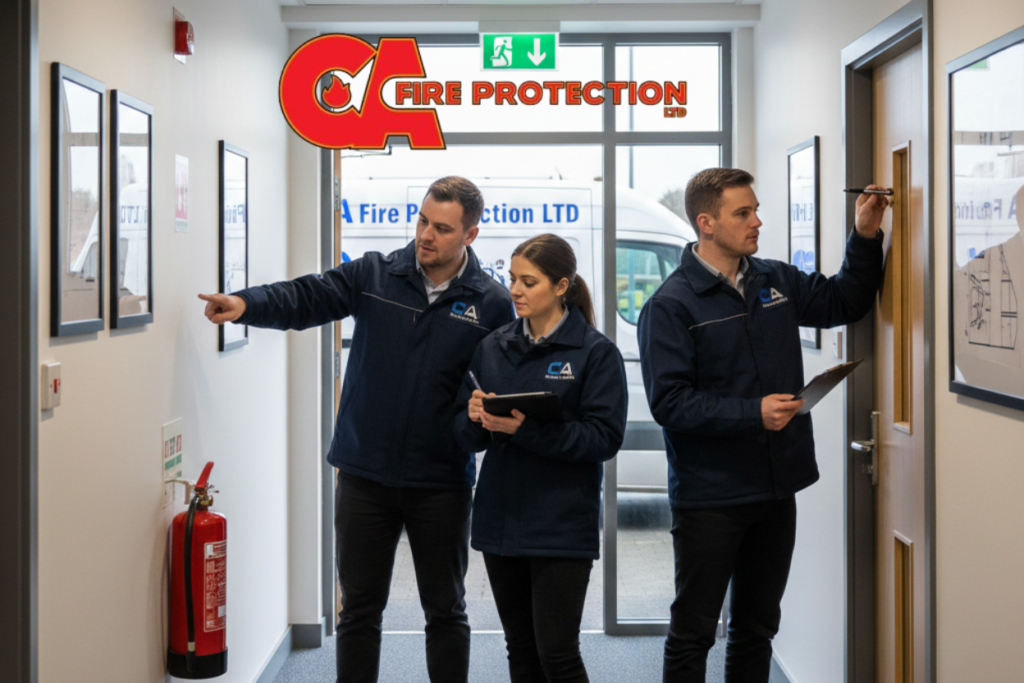
In 2025 and continuing into 2026:
- Purpose-built high-rise flat fires have become one of the leading risk types because of the height of the building, population density, and complicated building structures.
- The general awareness of fire safety and the issues surrounding it remains at high levels, which contributes to the increased demand for proper and up-to-date information.
All this will ensure that Fire risk assessment London is not a compliance requirement, but a crucial life-safety concern.
What Is Fire Risk Assessment?
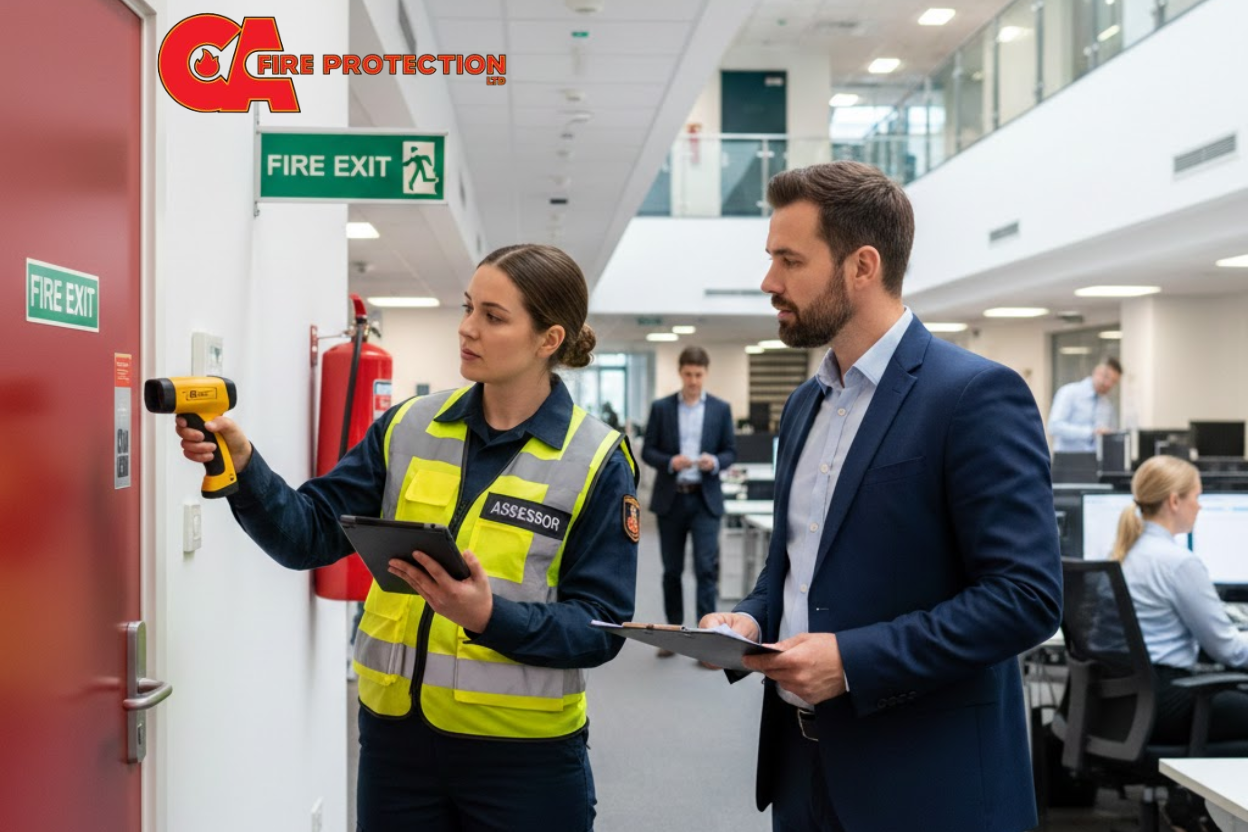
A Fire Risk Assessment (FRA) is a regular inspection of your premises in order to:
- identify fire hazards
- evaluate the potential victims and the ways they may be harmed
- evaluate risk levels
- make decisions concerning proper fire safety
- document and examine findings on a regular basis
Fire risk assessments are needed to:
- commercial premises
- residential properties (communal areas)
- offices
- care homes
- hospitality sites
Legal Requirements Under the UK Law
The person in charge, who in the majority of cases is the employer, owner or occupier of a building under the Regulatory Reform (Fire Safety) Order 2005 should undertake an adequate and appropriate fire risk assessment. Lack of compliance would result in fines or enforcement.
Key legal duties include:
- Determining hazards and unsafe environment
- This involves provision of sufficient fire protection systems
- Having escape routes and signage that is not unclear
- Revising assessments in case of layout, occupancy or use variations
The Reasons why London should have detailed fire risk assessments
Urban risk in London presents a particularly critical need to have proper FRAs:
- High population density
- High-rise buildings with complicated egress
- Commingled and frequent publicity
- Heritage buildings that need specialised attention
An effective fire risk evaluation enhances safety and assists in safeguarding lives, property and compliance position.
Fire Risk Assessment Process Step-by-Step
The assessment may be broken down as follows:
| Step | Description |
| 1. Identify Hazards | The sources of ignition, fuel and oxygen |
| 2. Identify Who’s at Risk | Workers, locals, tourists |
| 3. Evaluate Risks | Identify seriousness, probability |
| 4. Record Findings | Documentation of this was necessary |
| 5. Review & Update | At least on a yearly basis or upon changes |
This systematic methodology will give adequate coverage of risk and enhanced compliance results.
Self-made vs Professional Fire Risk Assessment
| Aspect | DIY Assessment | Professional Assessment |
| Legal Complexity | Basic understanding | Full legal compliance |
| Expertise Needed | Moderate | High |
| Suitable For | Small, low-risk sites | Any commercial and high-risk structure |
| Liability | Your responsibility | Professional accountability of Assessor |
Professional assessors are suggested in case of large or complex properties to make them legal and safe.
London and its Major Risk Factors (Data and Trends)
The following are some of the current trends which are affecting the fire risk profiles:
- ✔ There are greater severity and impact scores in fires in purpose-built high-rise flats
- ✔ There is increasing public awareness of the dangers of fire and the threat of electrical/drones
- ✔ UK compliance standards require frequent reviews to adapt to changes of the environment, which is particularly acute in such large cities as London
Knowledge of these trends aids in prioritisation of resources by building managers and owners and improved safety measures.
Mid Blog CTA: Obtain Professional Support
Require professional assistance in Fire Risk Assessment?
Does your London property conform and remain safe? — consult certified fire risk experts now.
Arrange an individual fire risk assessment by a qualified assessor and full compliance audit.
Action to Be Taken: Save Lives and obey London Fire Safety Act
Waiting until something occurs is not a good idea. Review CA Fire Protection LTD today.
- ✔ Legal compliance
- ✔ Improved security to occupants
- ✔ Manager and owner contentment
Your future safety of your property is guaranteed once you book a professional fire risk assessment.
Frequently Asked Questions
1. How frequently should a fire risk analysis be inspected?
Normally when major changes are made in premises or occupancy every year or when major changes happen.
2. What will become of me in case of failure of performing an FRA?
Fire authorities may impose fines, enforcement or close down.
3. Is it possible to make the assessment myself?
Simple buildings can be done by you but sites that are complex ought to employ professional bodies.
4. Is fire risk assessment a legal undertaking in London?
Yes - by the UK Regulatory Reform (Fire Safety) Order 2005.
5. What are some of the major aspects considered by an FRA?
Risks, at-risk individuals, currently implemented protective measures, emergency response, and records.