
Objective
It outlines the reasons why Fire protection Essex is essential and your obligations as a business owner, the parts of your building that should be considered and what you can do in the meantime to decrease fire risk.
Key Takeaways
- Every business needs a suitable fire risk assessment.
- Your duties can apply whether you own, manage or occupy the premises.
- Fire doors, compartmentation and fire stopping can help limit fire and smoke spread.
- Building work can affect existing fire safety measures.
- Good records and regular reviews are an important part of fire safety management.
Introduction
A fire can put your people, property and daily operations at risk within minutes. For any business, knowing where the risks are and how your building is protected should be part of normal safety planning, not something you deal with after an incident.
Businesses can learn more about fire protection requirements in Essex, including fire risk assessments, fire doors, compartmentation, fire stopping and other measures that help limit the spread of fire and smoke.
Here’s why this matters. Essex County Fire and Rescue Service reports that it attended 385 commercial building fires in Essex in 2022, with 122 caused by an electrical appliance or supply. Under UK fire safety rules, the Responsible Person must carry out and regularly review a fire risk assessment, maintain suitable safety measures and plan for emergencies.
So, whether you run an office, shop, warehouse, care facility or commercial property, understanding your fire risks is a practical step towards protecting people and keeping your business prepared.
Table of Contents
- Why fire protection matters to Essex businesses
- The real business fire risk consequences
- How passive fire protection helps
- What your business should check
- When to bring in fire safety specialists
- A simple check you can do today
- FAQs
Why Fire Protection Matters to Essex Businesses
Here’s the thing: fire safety is a legal responsibility, not something you should think about only after an incident.
GOV.UK states that employers, owners, landlords, occupiers and people who control business premises can be the Responsible Person. They must carry out and regularly review a fire risk assessment and put suitable fire safety measures in place.
Essex County Fire and Rescue Service also makes this clear. Every business, regardless of its size or number of employees, needs a fire risk assessment. The assessment should identify hazards, people at risk, steps to reduce those risks, emergency arrangements and staff training.
There is also a local reason to take this seriously. Essex County Fire and Rescue Service reported 385 commercial building fires in Essex during 2022, with 122, or 32%, linked to an electrical appliance or supply.
That figure does not mean every business faces the same risk. It does show why electrical safety and wider fire risk controls deserve proper attention.
The Business Fire Risk Consequences You Need to Consider
When fire protection is overlooked, the impact can go well beyond damage to a building.
Your employees, customers, contractors and visitors may all be affected. A serious fire can also damage stock, equipment and important business records while stopping normal operations.
Essex County Fire and Rescue Service reported in 2025 that more than 1,600 properties it had visited since 2022 did not have a suitable and sufficient fire risk assessment in place. The service linked poor fire safety planning with legal, financial and operational concerns.
For a business owner, the lesson is simple: knowing your risks gives you a chance to deal with them before they become an emergency.
How Passive Fire Protection Helps Protect Your Building
Passive fire protection refers to building measures designed to help contain fire and smoke and maintain the intended fire-resistant separation within a building.
This can include:
- Fire stopping around service penetrations
- Fire doors and associated components
- Compartmentation within walls and floors
- Cavity barriers
- Structural fire protection
For example, when new cables, pipes or ducts pass through a fire-resisting wall or floor, the opening needs suitable treatment so that the fire-resisting construction can continue to perform as intended.
This is why Fire Protection Essex should not be viewed only as an alarm or extinguisher requirement. Your building’s hidden areas can matter just as much as the equipment you can see.
What Should Your Business Check?
A useful way to start is to review the areas below.
| Area | What to check | Why it matters |
|---|---|---|
| Fire doors | Damage, seals, hinges and closing action | Helps maintain protected areas |
| Fire stopping | Openings around cables, pipes and ducts | Helps limit fire and smoke movement |
| Compartmentation | Walls, floors and barriers | Helps contain fire within intended areas |
| Fire alarms | Testing and maintenance records | Provides early warning |
| Emergency routes | Clear and usable exits | Supports safe evacuation |
| Records | Assessments, checks and training | Shows how fire safety is being managed |
GOV.UK recommends considering emergency routes, detection and warning systems, firefighting equipment, dangerous substances, evacuation plans and the needs of vulnerable people as part of the fire risk assessment.
If you have recently changed your premises, review the assessment again. Essex County Fire and Rescue Service says significant changes that affect fire risk should trigger a review.
When Should You Bring in Fire Safety Experts?
You do not need to wait for a serious problem before asking for specialist help.
A Fire protection company Essex businesses work with should be able to explain what has been checked, what needs attention and what evidence supports the recommended work.
For specialist building issues, Fire safety experts Essex businesses may need can assess areas such as fire doors, compartmentation and fire stopping.
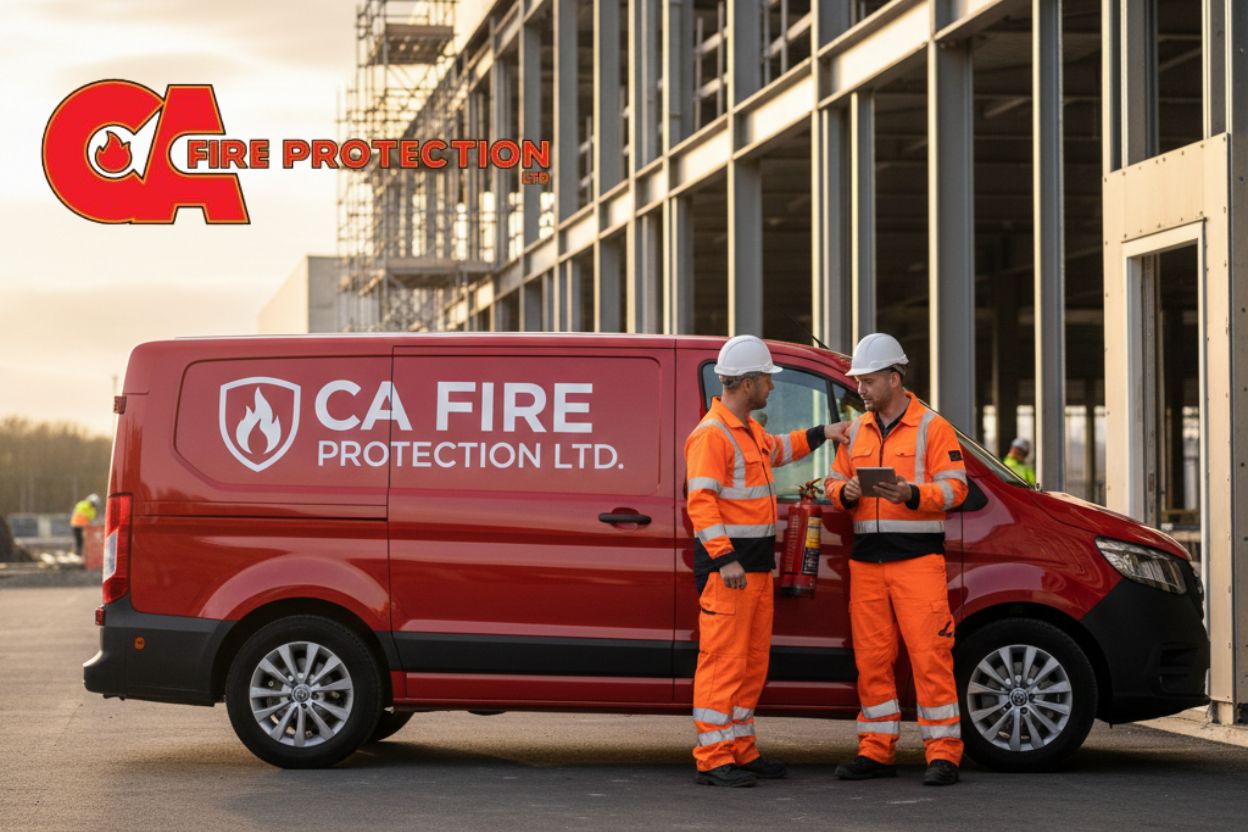
CA Fire Protection provides fire protection services in Essex, including fire stopping, fire door surveys, compartmentation work, cavity barriers and structural fire protection.
It is also important to understand the difference between a fire risk assessment and a specialist passive fire protection survey. The first looks at overall fire risks and the measures needed to manage them. A specialist survey can examine the condition and performance of specific building protection measures.
If your business needs Fire alarm installation Essex services, the requirements should also be considered in the context of the building and its fire risk assessment rather than treated as a standalone purchase.
A Simple Fire Safety Check You Can Do Today
Walk through your premises and ask yourself:
- Are all fire doors closing correctly?
- Have recent building works created openings through fire-rated walls or floors?
- Are emergency routes clear?
- Are your fire safety records up to date?
- Has your fire risk assessment been reviewed after major changes?
Do not try to repair technical fire-stopping defects simply because the problem looks small. The correct system and installation method matter.
Protect Your Business Before You Need the Protection
Good fire safety starts with knowing what risks exist in your building and taking sensible action to manage them.
For Essex businesses, Fire protection Essex involves more than visible safety equipment. It includes risk assessment, good records, suitable active systems and properly maintained passive protection.
If you are unsure about the condition of your fire doors, compartmentation or fire stopping, speak to a competent specialist and arrange an appropriate inspection.
CA Fire Protection can help businesses assess and address passive fire protection requirements across Essex.
Ready to check your premises?
If you manage a commercial property in Essex and have concerns about fire doors, compartmentation or fire stopping, arrange a professional assessment before a small issue becomes a serious one.
Frequently Asked Questions
Is fire protection a legal requirement for businesses in Essex?
Yes. The Responsible Person must carry out and regularly review a fire risk assessment and put suitable fire safety measures in place.
What are the main business fire risk consequences?
A fire can put people at risk, damage property and equipment, interrupt normal operations and lead to enforcement action where legal duties have not been met.
What does passive fire protection include?
It can include fire stopping, fire doors, compartmentation, cavity barriers and structural fire protection, depending on the building and its requirements.
Does a business need a written fire risk assessment?
Yes. Since changes introduced from 1 October 2023, responsible persons must record their fire risk assessment and fire safety arrangements in full, regardless of the size or purpose of the premises.
When should a fire risk assessment be reviewed?
It should be reviewed regularly, and when significant changes are made that could affect fire risk, such as changes to the premises or how it is used.